
How the work is done
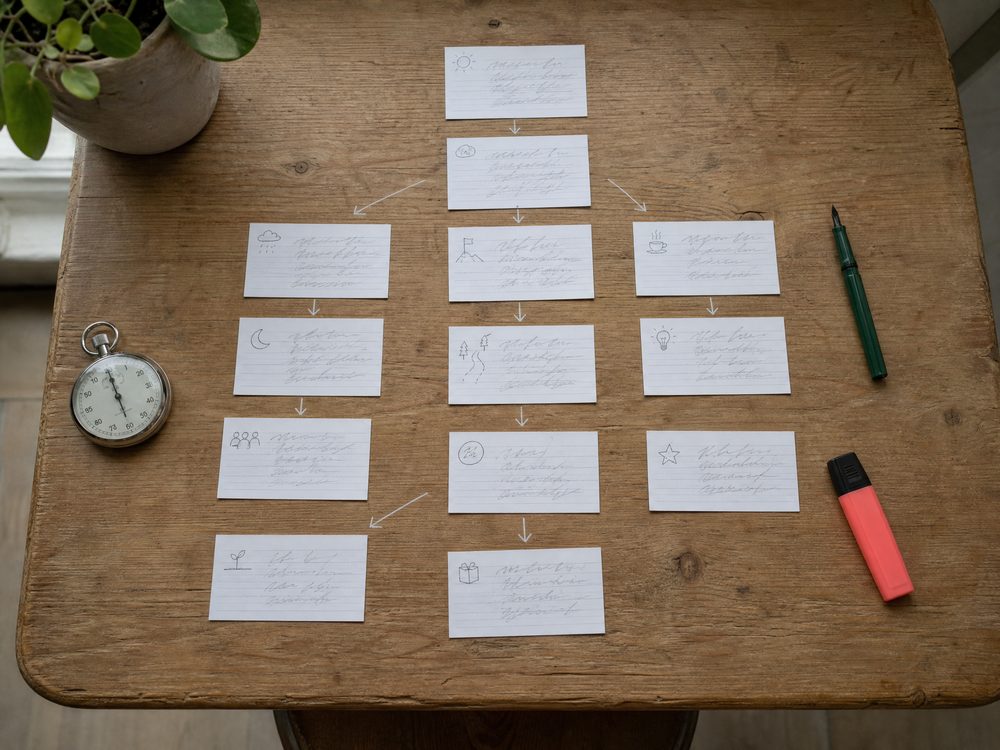
One person, one stopwatch, one packet of index cards. Each game is bought at retail on the day it becomes available, installed clean, and launched with no prior reading beyond knowing its genre. The clock starts at the first interactive moment.
Every instruction the game delivers gets a card as it arrives. The cards are numbered, marked told, shown or discovered, and laid out in sequence afterwards. Then the game is played to a reasonable conclusion — the hours logged are printed in every byline, and none of the games reviewed here has been covered on less than twenty-nine hours.
At ten hours, every rule the opening taught is re-tested cold. That check is the most useful thing this publication does and it was suggested by a reader.
What is not accepted
No review copies, no press access, no early builds, no embargo agreements, no sponsored coverage and no affiliate arrangements of any kind. Every game is paid for.
This is a matter of procedure rather than principle. An opening cannot be assessed honestly by someone who has been briefed about it, and press builds arrive with briefings attached. A game that has been explained to a reviewer in advance is a game whose tutorial has already been supplemented.
You cannot measure how well a game teaches you if somebody has already taught you the game.
What this publication is not
It is not a guide. There are no walkthroughs here, no tips, and no explanations of the mechanics discussed — where a review says a rule was badly taught, it does not then teach it, because doing so would undermine the only thing being measured.
It is also not a criticism of tutorials as a form. Several openings in this file are excellent and one is close to perfect. The argument here is narrower: that openings are designed with far less scrutiny than the systems they introduce, and that the difference between a good one and a bad one is usually ordering rather than effort.
On being wrong
Every timing is taken once, by one person, on one machine. That is a genuine limitation and it is stated on every review rather than buried here. Where readers repeat a measurement and produce a different figure that we can reproduce, the review is amended in the text and the amendment is described.
Two parts of the current procedure exist because readers demonstrated that earlier versions were producing flattering numbers. Both changes are described on the grading page, along with what they replaced.
Publishing rhythm
Six reviews are published here at present, drawn from forty-one openings studied. The gap between those figures is deliberate: most openings do not produce a finding worth a review, and studying one costs a fortnight of play whether or not it does.
New reviews appear when a game does something with its opening that has not appeared in the file before — a way of teaching, a way of failing, or a timing that breaks a pattern. Nothing is published on a schedule.
In one sentence
An independent, unsponsored publication that buys its own games, times their openings by hand, transcribes every instruction onto a card, checks ten hours later what survived, and publishes the whole procedure so that anyone can prove it wrong.